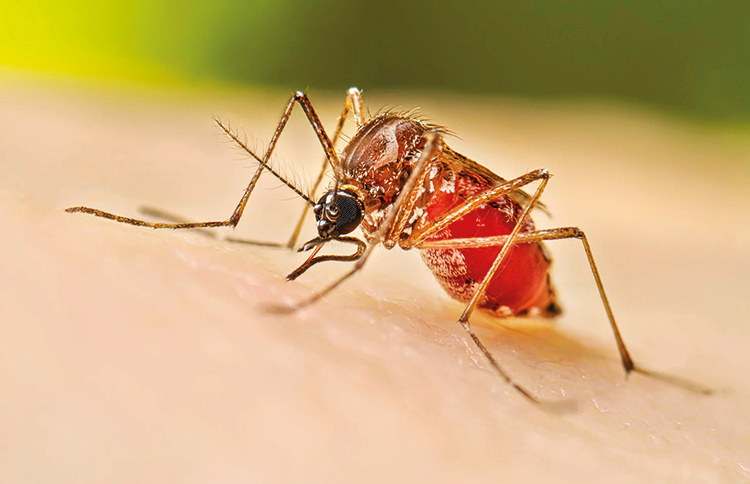
A picture taken on June 22 into the one crater that remained active until the end of the eruption that began on May 29. (Photo: Civil Defense)
Magma intrusion and a possible eruption on the Sundhnúkar crater row can begin at any time
Seismicity is steady, About 60-90 earthquakes per day
Updated 16 August at 14:50 UTC
Seismicity has been fairly steady in recent days, with about 60 to 90 earthquakes recorded per day. Most of the earthquakes are small, under a magnitude 1.0, in the area from Mt. Stóra-Skógfell to Grindavík. This is similar to the activity observed in the past two weeks.
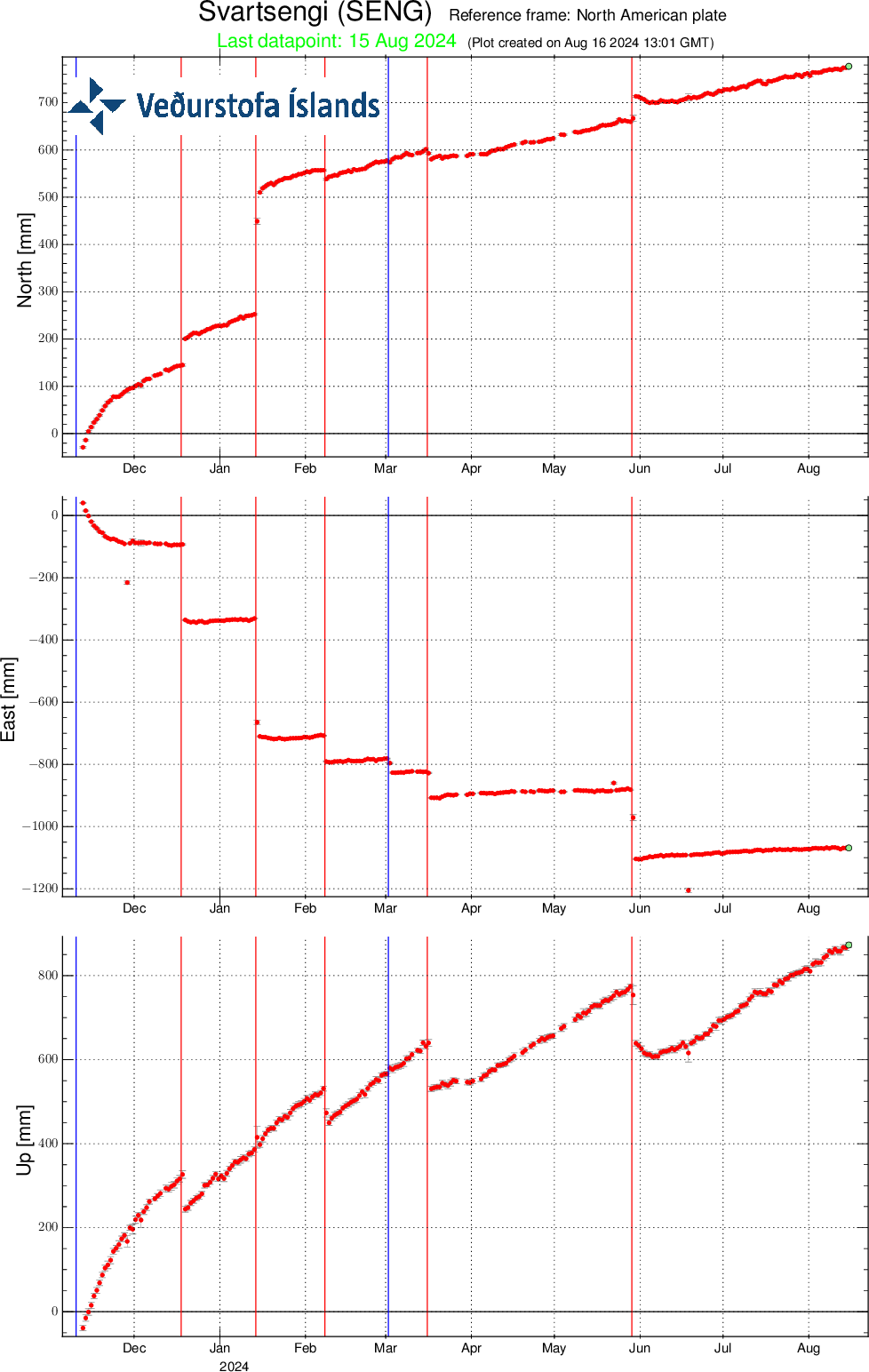
Uplift and magma accumulation have been occurring at a fairly steady rate in recent days. Model calculations also show that the volume of magma under Svartsengi is now estimated to be greater than it was before the last eruption, which began on May 29. Before the last eruption, magma accumulation continued for two weeks after reaching previous thresholds before an eruption began.
When comparing the activity before previous eruptions and magma intrusions, the current seismic activity along with the uplift shows clear signs that a magma intrusion and even an eruption could begin at any time. Based on the last eruption, continued magma accumulation could potentially be required for an additional 2-3 weeks before a new eruption starts.
The Icelandic Meteorological Office continues to monitor the situation closely around the clock. The hazard assessment can be seen here and is valid until August 20 unless conditions change.

www.malaymail.com/news/world/2026/01/11/bomb-attac…

BANGKOK, Jan 11 — A series of late-night bomb attacks targeted 11 PTT petrol stations in Thailand’s southern border provinces of Narathiwat, Pattani and Yala…
www.khaama.com/at-least-eight-refugees-die-37-resc…

At least eight refugees died and 37 were rescued when their boat sank off Badmeli near Izmir, Turkish authorities said on Saturday.
katu.com/news/local/oregon-confirms-first-measles-…

Health officials in Oregon have confirmed the state's first measles cases of 2026, with two people diagnosed in Linn County.
abc11.com/post/measles-north-carolina-state-report…
Measles in North Carolina: State reports 5th case linked to South Carolina surge