Updated 11 December 2025
The magma accumulation process under Svartsengi is still ongoing . In the run-up to eruptions on the Sundhnúkur crater row, the rate of magma accumulation has varied. Looking at the past eruptions, model calculations show that the rate of inflow has gradually decreased with each eruption. Over the past two weeks, however, the rate has remained fairly steady.
As long as magma is accumulating, the likelihood of a dike propagation or an eruption remains elevated. The uncertainty regarding the timing of the next eruption is greater when accumulation is slow. Based on the current accumulation rate, the timing uncertainty spans months.
Measurements and model calculations indicate that since March 2024, the volume of magma required to trigger a new diking event or eruption appears to have increased compared to earlier events. According to the models, the magma volume that has accumulated beneath Svartsengi between eruptions since March 2024 has varied between 17 and 23 million cubic meters. Model calculations now show that just over 17 million cubic meters of magma have been added to the accumulation area beneath Svartsengi since the last eruption in July. This is similar to the volume observed just before the May 2024 eruption.
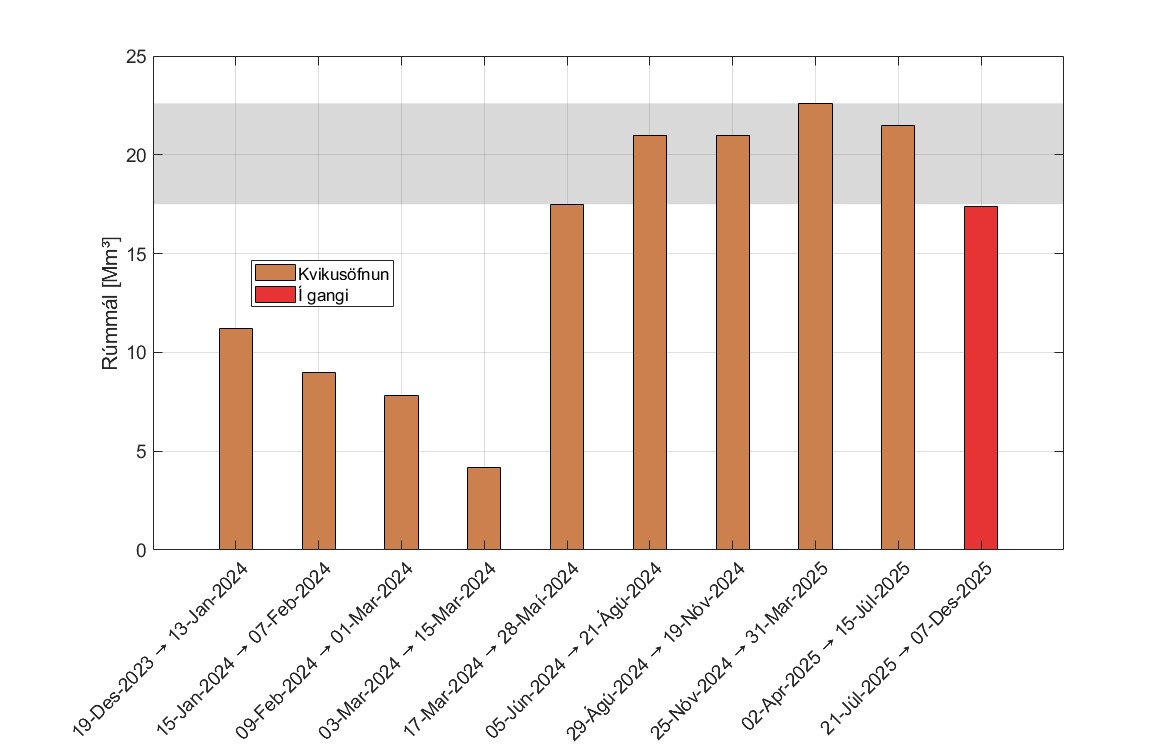
Total modelled volumes for each inflation episode at Svartsengi since December 2023. The orange bars show the total volume that accumulated before the next intrusion or eruption began. The red bar represents the volume accumulated from the July eruption to the present day. The grey shaded area indicates the range of inflation volumes to re-accumulate beneath Svartsengi to trigger the next event.
Seismic activity in the area remains low. Twelve small earthquakes have been measured in the last two weeks, located between Stóra-Skógfell and Grindavík.
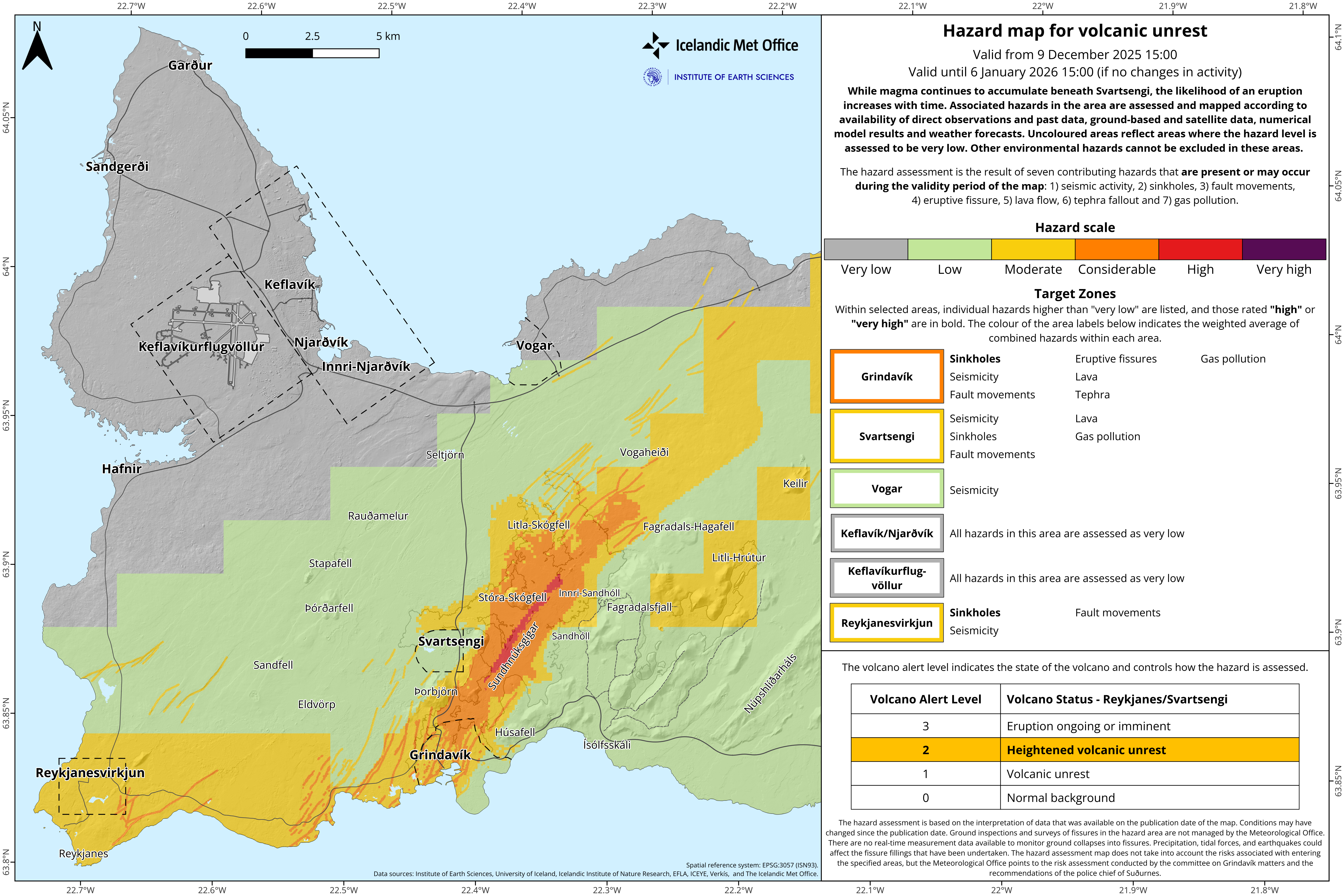
The Icelandic Meteorological Office's hazard assessment remains unchanged and is valid until 6th of January. The IMO continues to closely monitor developments and will update the assessment if activity changes.
The weather forecast for the area over the next few days predicts easterly winds of 15–23 m/s tomorrow morning with rain, followed by southeasterly winds of 10–18 m/s and showers in the afternoon. On Friday and through the weekend, windy conditions and intermittent showers will continue. These weather conditions may affect measurements, particularly visibility and the sensitivity of fibre-optic cable, seismic, and real-time GPS instruments. The Meteorological Office will continue to monitor the situation closely, but the public is encouraged to stay informed about weather warnings.

www.malaymail.com/news/world/2026/01/11/bomb-attac…

BANGKOK, Jan 11 — A series of late-night bomb attacks targeted 11 PTT petrol stations in Thailand’s southern border provinces of Narathiwat, Pattani and Yala…
www.khaama.com/at-least-eight-refugees-die-37-resc…

At least eight refugees died and 37 were rescued when their boat sank off Badmeli near Izmir, Turkish authorities said on Saturday.
katu.com/news/local/oregon-confirms-first-measles-…

Health officials in Oregon have confirmed the state's first measles cases of 2026, with two people diagnosed in Linn County.
abc11.com/post/measles-north-carolina-state-report…

Measles in North Carolina: State reports 5th case linked to South Carolina surge