The waiting period for the next event could be up to 3 months
Updated 25 September
Increased likelihood of an eruption from 27 September
The volcano alert level for Reykjanes/Svartsengi is elevated from 1 to 2
A new hazard map is issued
Past behavior of the Svartsengi volcanic system (since December 2023), has shown variability in magma volumes recharged to the Svartsengi reservoir prior to diking/eruption onset.
Analysis of past events has enabled an estimate of the likely volume range required to trigger the next diking event/eruption.
By using a geodetic model, it is possible to calculate the time needed to recharge these specific volumes, including their associated uncertainties. As of today, it is assessed that the lower bound of 11 million m3 will be reached on 27 September and the upper bound of 23 million m3 on 18 December, provided.
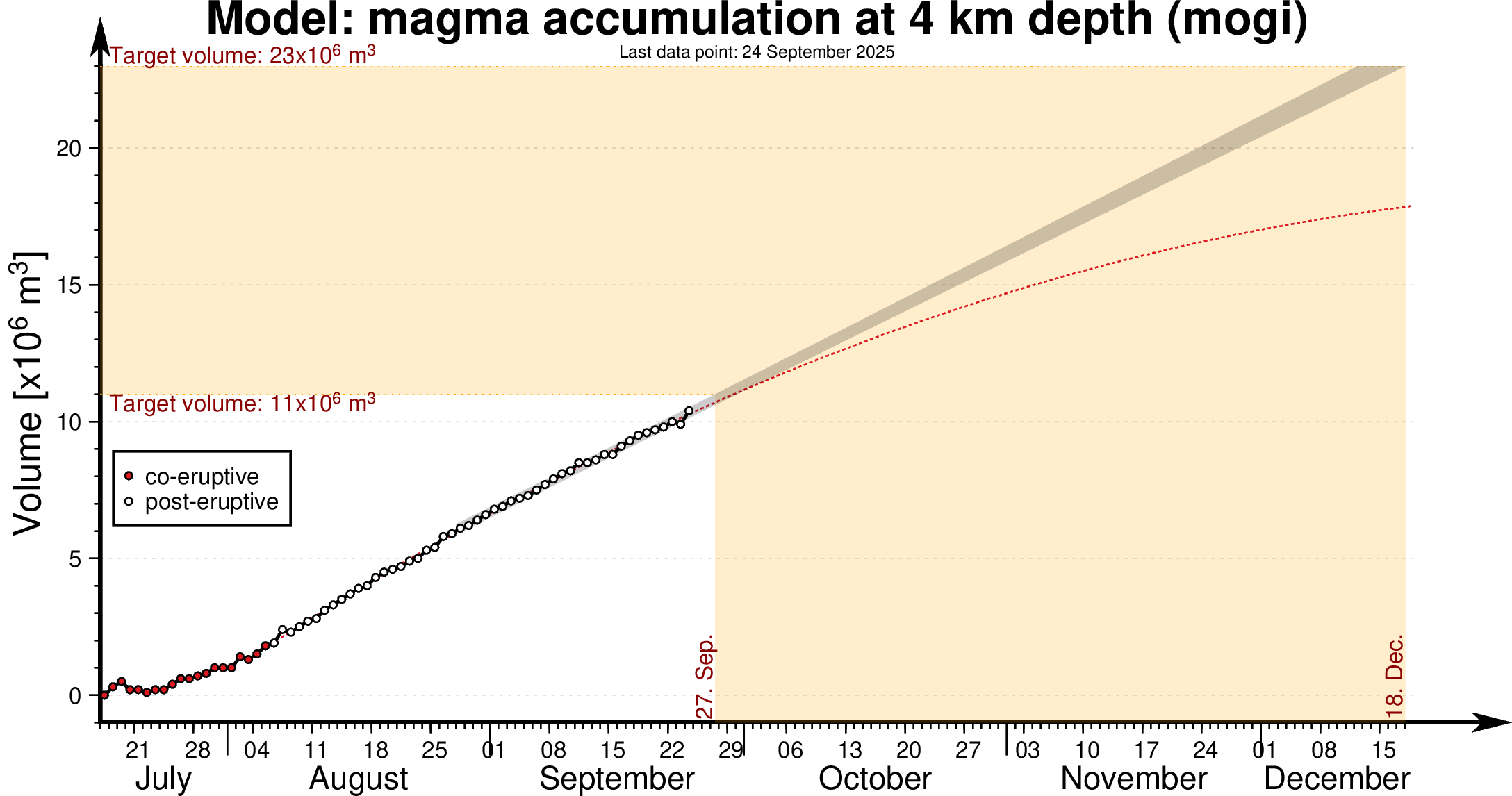 The graph shows magma accumulation at a depth of 4 km beneath Svartsengi from July to 18 December 2025. The black dots indicate the measured magma volume after the last eruption, while the red dots show magma accumulation during the eruption.
Once the lower volume is reached it is considered that we have entered a period with increased likelihood of a new diking event and eruption. An eruption may occur any time after this lower bound is reached. This time period from 27 September to 18 December represents the medium-term forecast. This forecast will change based on variations in the magma inflow rate and will be updated accordingly. As in previous events the short-term forecast will be issued as soon as the real-time IMO monitoring network detects new activity indicative of a dike propagation.
For these reasons the IMO decided to increase the volcano alert level for Reykjanes-Svartsengi from VALS=1 to VALS=2 and, accordingly, the hazard assessment for the area has been re-evaluated and elevated.
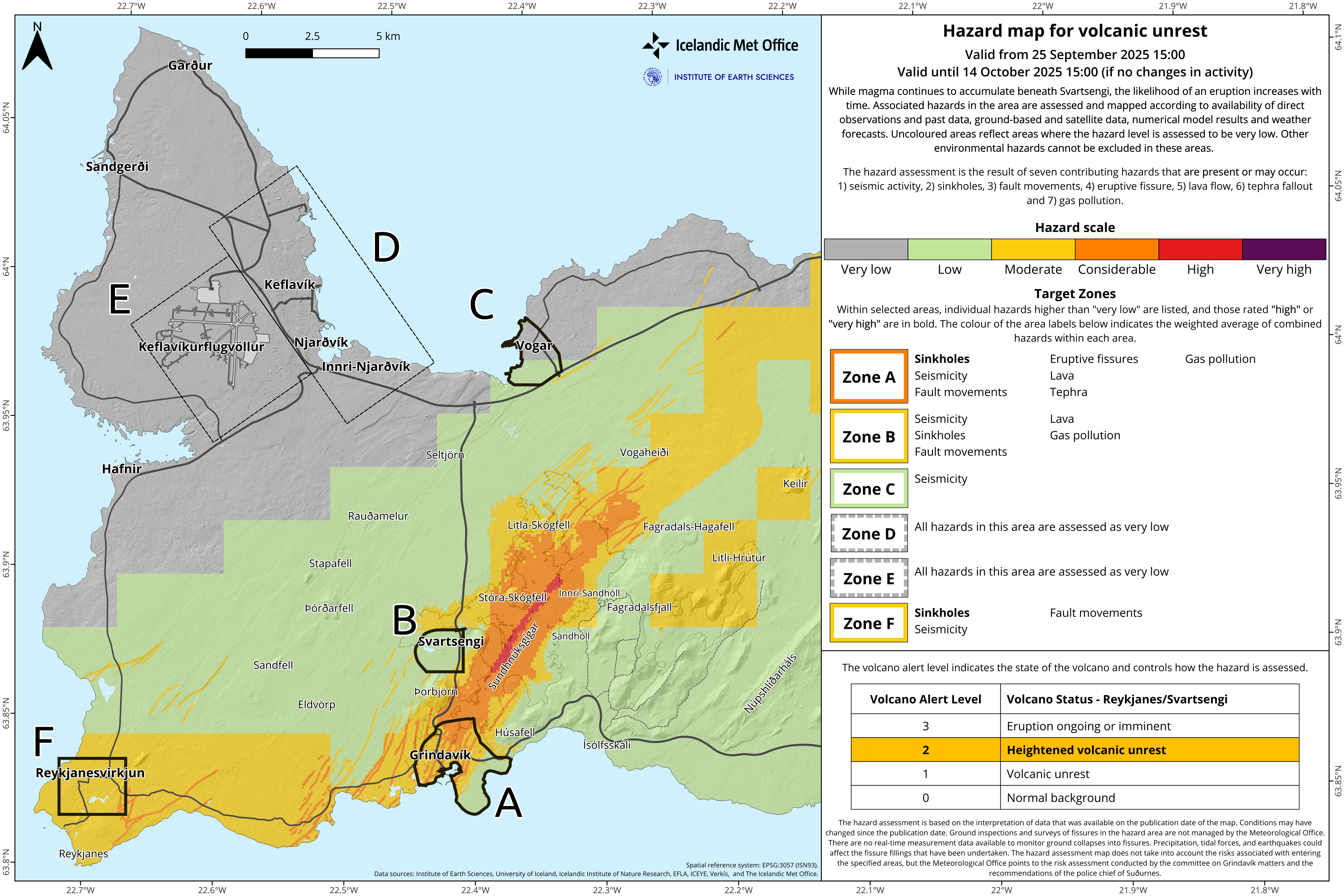
A new hazard assessment map has been issued and is valid from 25 September to 14 October, unless activity changes require an update.

www.malaymail.com/news/world/2026/01/11/bomb-attac…
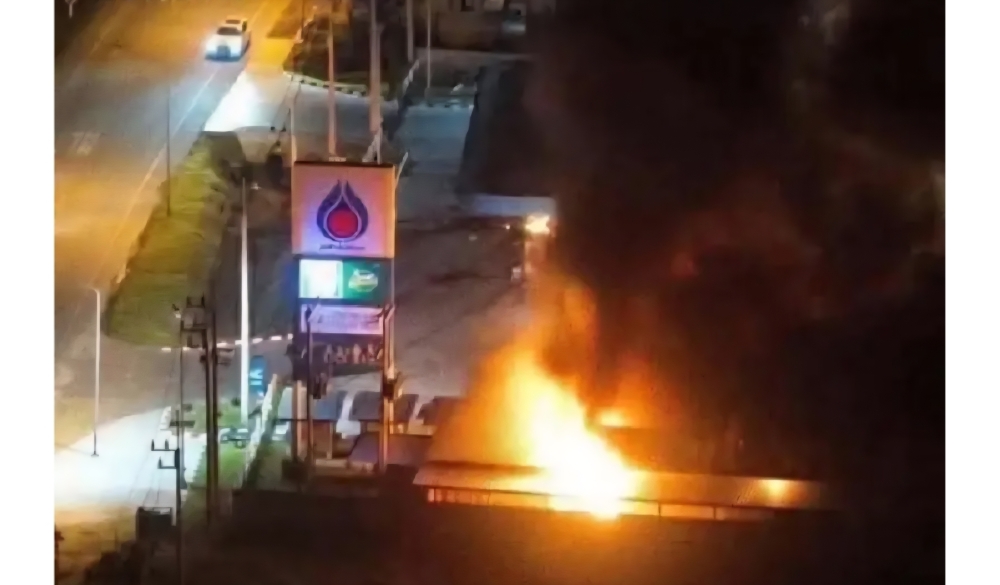
BANGKOK, Jan 11 — A series of late-night bomb attacks targeted 11 PTT petrol stations in Thailand’s southern border provinces of Narathiwat, Pattani and Yala…
www.khaama.com/at-least-eight-refugees-die-37-resc…

At least eight refugees died and 37 were rescued when their boat sank off Badmeli near Izmir, Turkish authorities said on Saturday.
katu.com/news/local/oregon-confirms-first-measles-…

Health officials in Oregon have confirmed the state's first measles cases of 2026, with two people diagnosed in Linn County.
abc11.com/post/measles-north-carolina-state-report…
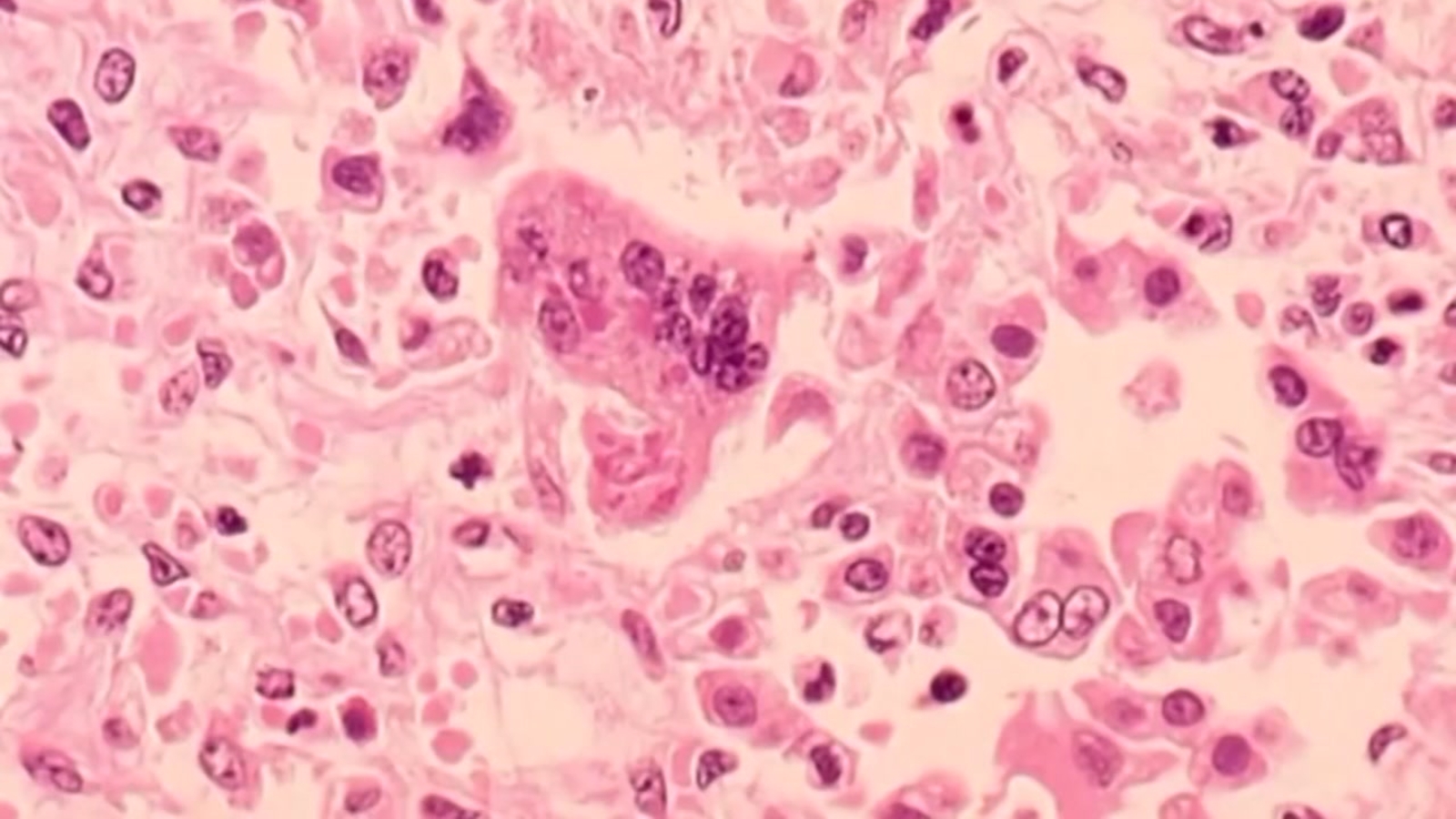
Measles in North Carolina: State reports 5th case linked to South Carolina surge